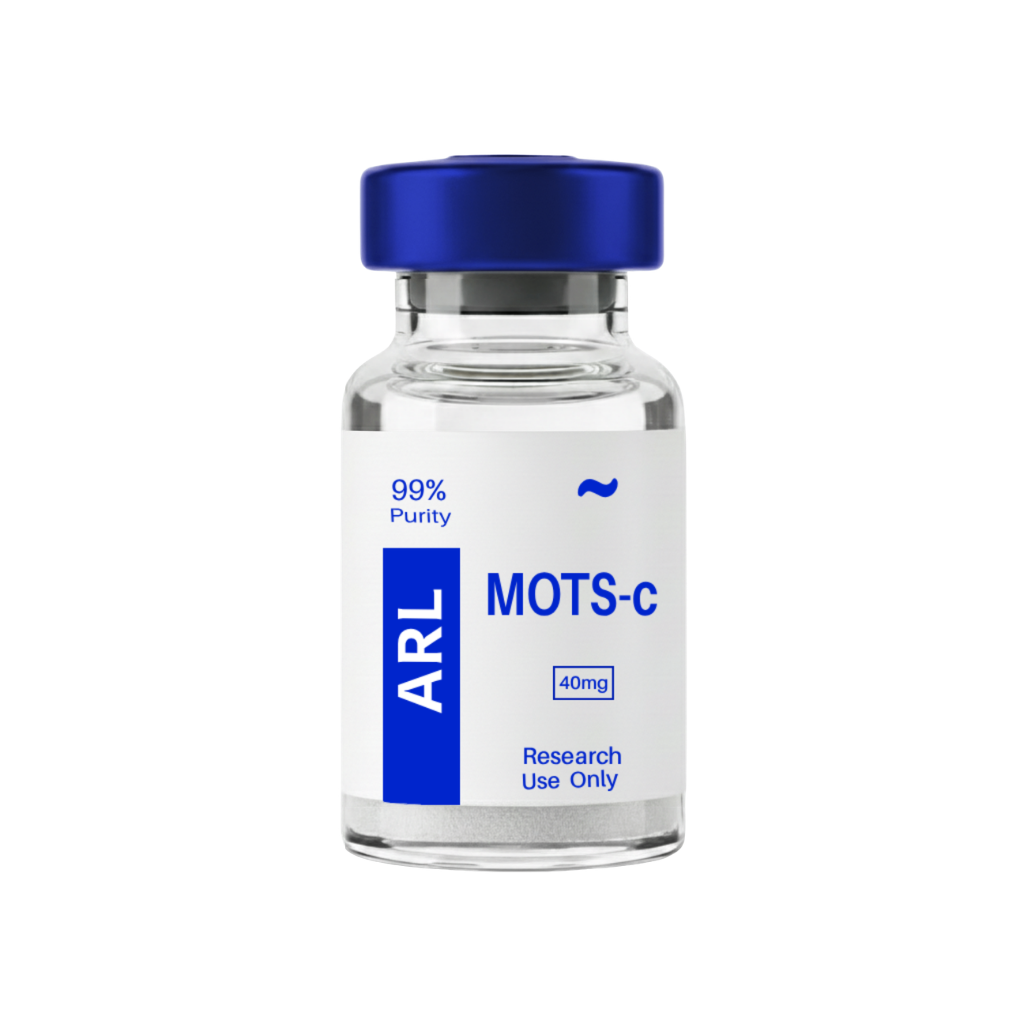
MOTS-c
MOTS-c
This batch of MOTS-c Mitochondrial Peptide has been third party lab tested and verified for quality.
Contents: Mitochondria
Form: Powder
Purity: 99.0%
Couldn't load pickup availability
Free Reconstitution Solution automatically added to your cart with each order.
This product is Made, Tested & Shipped From Canada.
Ships Today
Order by 1:00 PM EST
Free Shipping
For 2 or more vials
Verified+

MT-II: A Laboratory-Produced Melanotropic Peptide
MT-II represents a manufactured peptide designed to replicate the behavior of the naturally-occurring α-melanocyte-stimulating hormone (α-MSH). Unlike the endogenous hormone, this seven-amino acid cyclic compound displays altered patterns of receptor engagement, permitting simultaneous activation of several melanocortin receptor classes. Beyond its recognized function in supporting melanin creation within skin tissue, MT-II communicates with additional receptor populations influencing satiety mechanisms and neurological pathways related to sexual responsiveness.
Background and Development History
During the 1980s, University of Arizona investigators developed MT-II during exploration of α-MSH's influence on both skin appearance and physiological function. Initial experimental findings indicated α-MSH generated darkened skin appearance and measurable behavioral consequences in test organisms. These intriguing preliminary findings generated further interest in synthesizing altered versions.
Initial therapeutic intent focused on delivering skin darkening without necessitating sunlight contact. Investigation that followed uncovered MT-II possessed considerably wider biological capacities extending past simple pigmentation modification. Researchers examined MT-II's function in controlling feeding patterns, managing appetite, and affecting basic metabolic operations. Early data hint at probable uses for modifying addictive behaviors, diminishing hunger drive, and changing glucagon production, though these findings have not yet reached clinical application status.
Chemical and Structural Properties
Scientific Investigation of Melanotan II
Melanocortin Signaling Pathways and MT-II Function
MT-II produces observable effects by binding to melanocortin receptors, a family subdivided into five functional categories (MC1R–MC5R). Every receptor category participates in managing distinct biological operations. MT-II binds with greatest intensity to MC4R and MC1R, showing reduced binding with MC3R. The fact that MT-II distributes across multiple receptor subtypes accounts for its numerous physiological influences.
MC1R (Melanocortin-1 Receptor): Concentrated in melanin-producing cells, this receptor's activation triggers melanin creation, brightening skin and hair coloration.
MC2R (Melanocortin-2 Receptor): Positioned in the adrenal tissue, it oversees glucocorticoid release, chiefly cortisol, and takes part in the organism's reaction to stressors.
MC3R (Melanocortin-3 Receptor): Recognized for involvement in appetite feelings and caloric stability, MC3R participation sustains metabolic equilibrium, despite ongoing study of its complete purpose.
MC4R (Melanocortin-4 Receptor): Engaging this receptor influences food consumption, reproductive behavior, and metabolic expenditure. MT-II also modulates arousal sensation and caloric balance through this pathway.
MC5R (Melanocortin-5 Receptor): Distributed in perspiration-producing structures and cells that produce insulin, MC5R contributes to fluid discharge and energy control.
Investigation of MT-II Effects in Autism Disorders
Ongoing investigation into MT-II's potential value in autism spectrum disorder (ASD) reveals constructive preliminary information. Examination employing animal models of ASD suggests MT-II application may reduce autism-spectrum behavioral patterns. Currently, no cure for ASD exists, yet emerging investigation stresses oxytocin's capacity to remedy social and behavioral dysfunction in autism.
Scientists employed maternal immune activation animal representations, which faithfully model ASD characteristics, to evaluate if MT-II—known to promote oxytocin discharge—might mitigate autism-related behavioral problems. Data indicated MT-II reversed primary dysfunction patterns, particularly communication problems, social deficiencies, and rigid behavioral sequences.
Investigation additionally determined that MT-II increased oxytocin receptor appearance in brain zones important for interpersonal awareness. This observation creates a mechanistic explanation linking MT-II's enhancement of oxytocin to mitigation of autism-related problems. These results suggest MT-II could serve as a therapeutic tool to affect neurochemical circuits underlying human connection and developmental neuropsychiatric conditions.
Not merely suggesting MT-II as a possible autism intervention, this investigation illuminates a distinct neural system probably fundamental to autism pathophysiology. Recognition of this pathway permits development of increasingly sophisticated ASD models, promoting expansion of healing and preventive methodologies.
MT-II's Role in Appetite Suppression and Body Composition
Extensive investigation documents MT-II's capacity to prevent weight gain and diminish appetite in laboratory studies. The melanocortin-4 receptor manages consumption preference and consumption behavior, with MT-II serving as a potent stimulant. When delivered to experimental mice, MT-II creates decreased food intake and modifies consumption patterns, with animals reducing preference for fatty options they ordinarily desire. Creatures lacking functional MC-4R display unchanged responses, confirming the specificity of this mechanism.
MT-II's operation mirrors leptin's action—an appetite-suppressing messenger that reduces hunger urges. Leptin possesses restricted success treating weight disorders, even when natural production is satisfactory, possibly due to multiple distinct satiety-messaging systems—one involving leptin, one functioning independently. Evidence points to MT-II simultaneously engaging both appetite pathways, suggesting superior effectiveness relative to leptin as an external appetite suppressant. Discoveries further show MT-II influences thyrotropin-releasing hormone, a hunger-control related gene that functions through the leptin system and MC-4R activation, in mind structures responsible for appetite management.
MT-II and Its Effects on Blood Sugar Control
Diabetes results from excessive blood glucose, too much pancreatic hormone, and elevated ketone manufacturing. Research has long confirmed leptin assists through increasing glucose absorption, preventing hormone discharge, and blocking pathways generating ketone bodies, through pathways not involving insulin. Scientists are investigating leptin receptor stimulation as an alternative therapeutic approach for diabetes.
Investigation demonstrates leptin's effects on glucose involve melanocortin receptors, with MT-II performing analogously. Notably, MT-II enters the brain across protective barriers substantially superior to leptin's capacity. Externally-administered leptin struggles reaching the brain in helpful amounts because of limited barrier passage. MT-II's advantageous permeability offers therapeutic superiority despite the two substances employing fundamentally equivalent melanocortin receptor pathways.
MT-II, Self-Restraint, and Alcohol Consumption Patterns
Expanding on evidence of MT-II's oxytocin-related impacts documented in autism investigation, investigation identifies MC-4R participation in managing impulsive decision-making. Behavioral experiments employing mammals indicate MT-II application reduces alcohol consumption and increases other beverage preference, even among creatures preferring alcoholic drinks. Current investigation reveals MT-II enhances naltrexone's potency, raising its power by greater than sevenfold in reducing excessive drinking patterns.
Such outcomes imply MT-II could operate as a treatment for substance-use conditions while exposing underlying mechanisms of addiction and desire. This investigative pathway could increase comprehension of how oxytocin affects impulse management, consumption urges, and substance reliance. Ultimately, clarifying these mechanisms might help understand human urges and motivation patterns impacting work, interpersonal ties, and psychological operation.
MT-II and Dysfunction Related to Sexual Activity
Sexual dysfunction associates predominantly with vascular issues and receives management via agents including sildenafil that improve circulation by loosening blood vessel resistance. Given some sexual dysfunction originates from non-circulatory sources, such pharmaceuticals function inadequately for many individuals and women experiencing low sexual motivation. MT-II demonstrates usefulness for sexual dysfunction through neurological action rather than purely vascular effects. Scientific reports reveal approximately 80% of sildenafil-resistant individuals improved with MT-II administration. MT-II undergoes continuing examination as probable intervention for sexual desire concerns in women and men.
Authorship and Contributors
Dr. Mac E. Hadley, Ph.D., commands recognition as a top authority in melanocortin peptide study and drug behavior. Dr. Hadley wrote, collected, and arranged this literature overview. Dr. Hadley became celebrated by identifying that melanocortin compounds manage sexual operations in both genders—a discovery prompting scientific consideration of MT-II. Dr. Hadley's work at the University of Arizona meaningfully developed understanding of melanocortin receptor mechanics, creation of artificial peptides, and curative employment in neuroendocrine systems plus metabolic regulation.
Partnering Research Specialists
Dr. Hadley worked alongside distinguished colleagues including Dr. Victor J. Hruby, Dr. H. Wessells, and Dr. Stephen H. King whose partnered endeavors grew MT-II comprehension. Their publications in prominent science sources including Peptides, Life Sciences, and the International Journal of Impotence Research detailed receptor features, function, and therapeutic importance of melanocortin activators. Their aggregate effort produces the scholarly underpinning supporting thorough grasp of MT-II's manifold impacts spanning complexion alteration, energy control, brain defense, and intimate health.
-
check_circle
HIGHEST QUALITY PEPTIDES
Our products are scientifically formulated and manufactured in cGMP-compliant facilities.
-
encrypted
FAST DELIVERY
Enjoy fast and reliable 3–5 day shipping.
-
check_circle
Dedicated Customer Service
Our customer service team is highly knowledgeable in peptide research and its applications. We’re available 24/7 to assist you.
Verified reviews
Tested. Verified. Trusted.
We take a laboratory-first approach to quality. Each batch is made under controlled conditions and verified by an independent lab (HPLC/MS). We only ship batches that test ≥99% purity, and we provide a full COA, including identity, methods, and chromatograms, for your review.
You may also like
-
Ipamorelin Growth Hormone Peptide - Research Grade Peptide
Regular price From $32.00Regular price From $32.00 Sale priceUnit price / per$42.0023% -
SAVE 25%Reconstitution Solution
Regular price $15.00Regular price $15.00 Sale priceUnit price / per$20.0025% -
Sermorelin - Premium Research Peptide
Regular price From $70.00Regular price From $70.00 Sale priceUnit price / per$92.0023% -
SAVE 25%Gonadorelin
Regular price $50.00Regular price $50.00 Sale priceUnit price / per$67.0025% -
SAVE 23%SLU-PP-332
Regular price $125.00Regular price $125.00 Sale priceUnit price / per$164.0023% -
SAVE 25%Tirzepatide
Regular price From $50.00Regular price From $50.00 Sale priceUnit price / per$67.0025% -
SAVE 23%Semaglutide
Regular price From $36.00Regular price From $36.00 Sale priceUnit price / per$47.0023% -
SAVE 23%CJC-1295 No DAC & Ipamorelin
Regular price $95.00Regular price $95.00 Sale priceUnit price / per$124.0023% -
SAVE 23%5-Amino-1MQ
Regular price $80.00Regular price $80.00 Sale priceUnit price / per$105.0023% -
SAVE 23%BPC-157 + TB-500 + GHK-Cu
Regular price $155.00Regular price $155.00 Sale priceUnit price / per$202.0023% -
SAVE 23%L-Carnitine
Regular price $97.00Regular price $97.00 Sale priceUnit price / per$127.0023% -
CJC-1295 (No DAC) - Premium Research Peptide
Regular price From $75.00Regular price From $75.00 Sale priceUnit price / per$98.0023% -
SAVE 23%Kisspeptin-10
Regular price From $65.00Regular price From $65.00 Sale priceUnit price / per$85.0023% -
SAVE 23%CJC-1295 with DAC
Regular price $139.00Regular price $139.00 Sale priceUnit price / per$182.0023% -
SAVE 24%KPV Tripeptide
Regular price From $56.00Regular price From $56.00 Sale priceUnit price / per$74.0024% -
SAVE 24%Thymosin Alpha-1
Regular price From $79.00Regular price From $79.00 Sale priceUnit price / per$104.0024% -
SAVE 25%Epitalon (Epithalon)
Regular price From $50.00Regular price From $50.00 Sale priceUnit price / per$67.0025% -
Ipamorelin - Premium Research Peptide
Regular price From $32.00Regular price From $32.00 Sale priceUnit price / per$42.0023% -
SAVE 23%Tesamorelin
Regular price From $80.00Regular price From $80.00 Sale priceUnit price / per$105.0023% -
SAVE 23%GHRP-6 - Premium Research Peptide
Regular price From $29.00Regular price From $29.00 Sale priceUnit price / per$38.0023% -
SAVE 25%Melanotan II (MT2)
Regular price $50.00Regular price $50.00 Sale priceUnit price / per$67.0025% -
SAVE 23%Retatrutide Triple Agonist
Regular price From $90.00Regular price From $90.00 Sale priceUnit price / per$118.0023% -
SAVE 24%IGF-1 LR3 (Long R3)
Regular price From $40.00Regular price From $40.00 Sale priceUnit price / per$53.0024% -
SAVE 23%BPC-157 + TB-500
Regular price From $97.00Regular price From $97.00 Sale priceUnit price / per$127.0023% -
SAVE 24%Dermorphin
Regular price $56.00Regular price $56.00 Sale priceUnit price / per$74.0024% -
SAVE 23%Glutathione
Regular price $83.00Regular price $83.00 Sale priceUnit price / per$109.0023% -
SAVE 24%Hyaluronic Acid
Regular price $28.00Regular price $28.00 Sale priceUnit price / per$37.0024%
Every vial we sell comes from a lab that follows current Good Manufacturing Practices (cGMP). That means each step of production is documented and controlled. Before a batch is released, it’s tested by independent third-party labs for purity, identity, and sterility. Certificates of analysis are available so you can see the exact test results.
Yes. The labs we work with use ISO-certified clean rooms where air quality, equipment, and handling procedures are tightly regulated. Staff are trained to pharmaceutical-grade standards. This ensures the peptides are produced in an environment that minimizes contamination risks.
Peptides in lyophilized (freeze-dried) form are stable at room temperature for transport. Once you receive them, refrigeration is recommended to maintain long-term integrity. We package every order securely to prevent damage and ship promptly, so your vials arrive in optimal condition.
We operate under strict in-house protocols that follow current Good Manufacturing Practices (cGMP). That means our team oversees the entire process from sourcing raw amino acids to the final lyophilized vial. Nothing is outsourced or repackaged. This gives us full control over purity, consistency, and sterility, and it’s why we can stand behind every single vial we ship.
Store them in the refrigerator, away from direct light and heat. If you need to keep them longer, some peptides can be stored frozen. Each vial comes with clear handling instructions so you know the proper conditions for stability.
The strongest proof is transparency. For every peptide, we can provide certificates of analysis, manufacturing documentation, and references to the published scientific research behind it. If you ever have questions, we’ll show you the data rather than ask you to take our word for it.
The difference is transparency. Most sites give you a product name and a price. We provide full batch testing, lab documentation, and direct access to certificates of analysis so you don’t have to guess what you’re getting. When you order from us, you know exactly what’s in the vial, where it was made, and how it was verified.